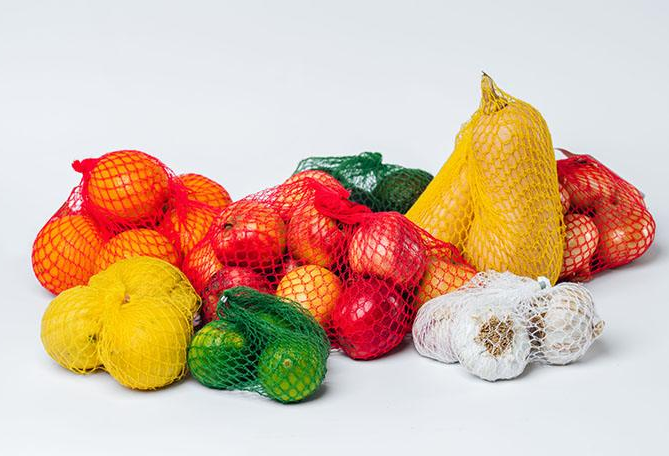
Cellulose netting brings a natural, sustainable approach to fresh produce packaging. The net is made from wood-based cellulose fibres that are spun into yarn and knitted into a mesh, so its composition is 100% natural and it is biodegradable. It keeps citrus, stone fruit, potatoes, onions and other produce well ventilated, clearly visible and beautifully presented.
For packers whose customers are asking for less plastic, cellulose netting is the most direct answer in our fruit and vegetable packaging range. It does the same job as a classic produce net, with a material that comes from wood.
What cellulose netting is made of
Cellulose is the natural fibre that gives wood its structure. To make cellulose netting, cellulose fibres from wood are spun into yarn, and that yarn is knitted into a net. The finished material is made from natural fibres rather than plastic, which is why it is biodegradable.
The net is light and soft to the touch. It treats delicate fruit gently, and it gives the pack a natural look that many shoppers link with fresh, honest food. On a shelf full of plastic packaging nets, that difference is easy to see.
Ventilation and visibility for fresh produce
Like any good produce net, cellulose netting has an open structure that lets air move around the contents. Fruit and vegetables keep breathing after harvest, and the net lets warmth and moisture escape, so the produce stays dry and fresh. The mesh also leaves the contents in plain view, which means shoppers can check colour and quality before they buy.
Colours, widths, tube diameters and mesh sizes
Cellulose netting is available in various colours, widths, tube diameters and mesh sizes. That choice lets you match the net to the product and the pack size, whether you are packing a handful of lemons or a larger bag of potatoes. A smaller mesh holds smaller produce securely, a wider tube makes room for bigger packs, and the colour can be chosen to bring out the fruit or vegetables inside.
How cellulose netting is packed
Packing with cellulose netting follows the same steps as other tubular produce nets, so it fits easily into an existing routine. You start by choosing the format that suits your product. The produce is then loaded into the mesh tube, by hand or with a packing machine. The pack is closed at both ends, usually with a clip, and a label can be added to carry your brand and product information.
Which produce suits cellulose netting?
Cellulose netting is used for citrus fruit such as oranges, lemons and mandarins, for stone fruit, and for vegetables such as potatoes and onions. It works for most loose produce that is normally sold in nets. It is a particularly good fit for organic ranges and premium lines, where a natural material supports the story the product is already telling.